A city of knowledge, ritual, and power
Every platform, temple, and carved wall reveals how Chichen Itza connected cosmology, governance, and daily life across centuries.
Table of Contents
Origins of Chichen Itza
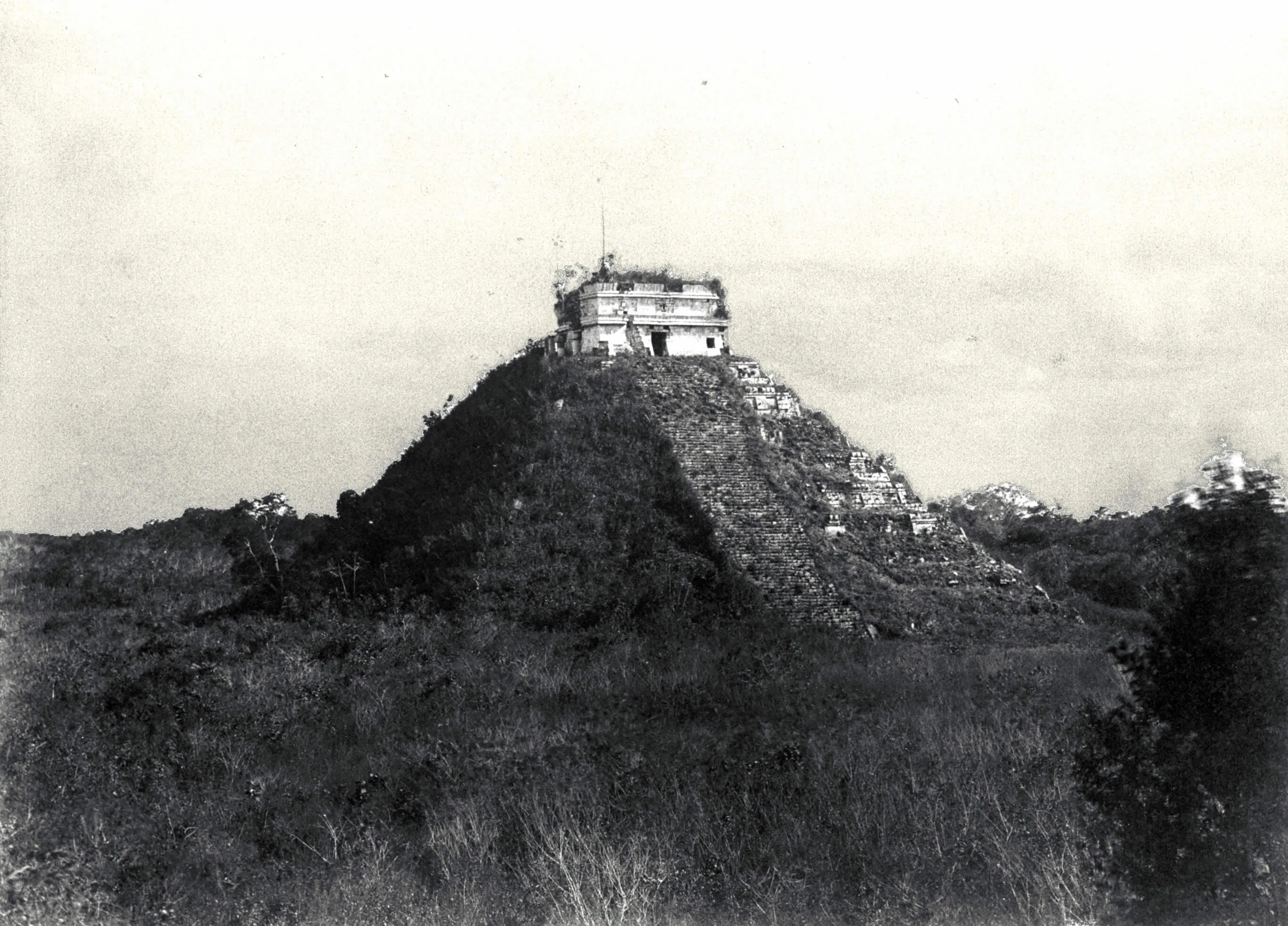
Long before modern highways connected Cancun, Merida, and Valladolid, this region of the Yucatan Peninsula supported complex Maya communities linked by trade routes, ritual traditions, and shared systems of knowledge. Chichen Itza emerged over centuries as one of the most significant urban and ceremonial centers in the northern lowlands, not as an isolated monument, but as a dynamic city connected to wider networks of exchange and political influence. Archaeological evidence suggests periods of growth, transformation, and adaptation that made the site resilient and culturally powerful for generations.
Its name is commonly interpreted as referring to the mouth of the well of the Itza, pointing to the importance of water and sacred geography in a limestone landscape shaped by cenotes. Chichen Itza did not rise in a single moment; it evolved through changing leadership, architectural programs, and regional relationships. What visitors see today is the visible surface of a long historical process in which religion, governance, astronomy, and economy reinforced one another, producing a city that still commands global attention.
El Castillo and sacred geometry
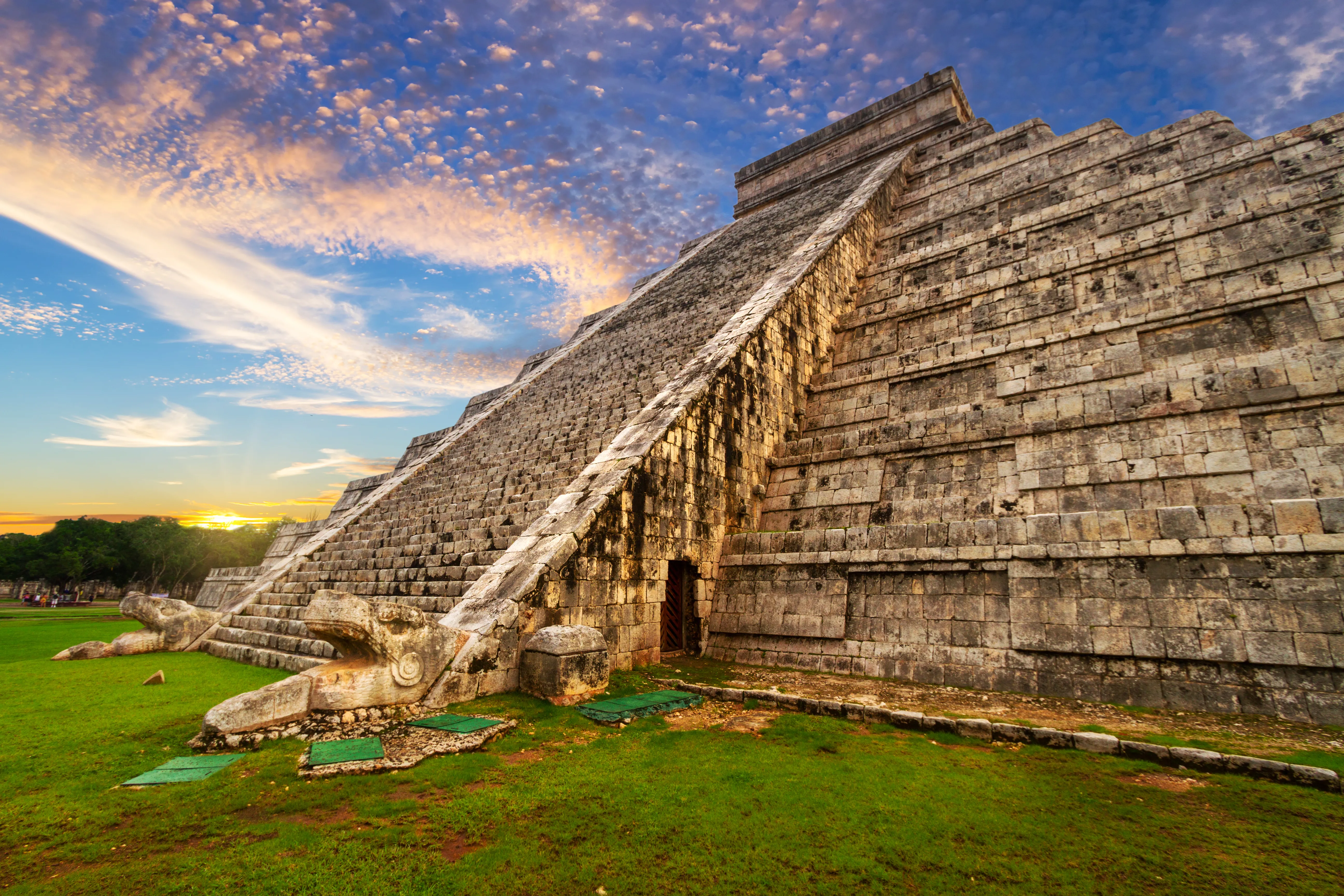
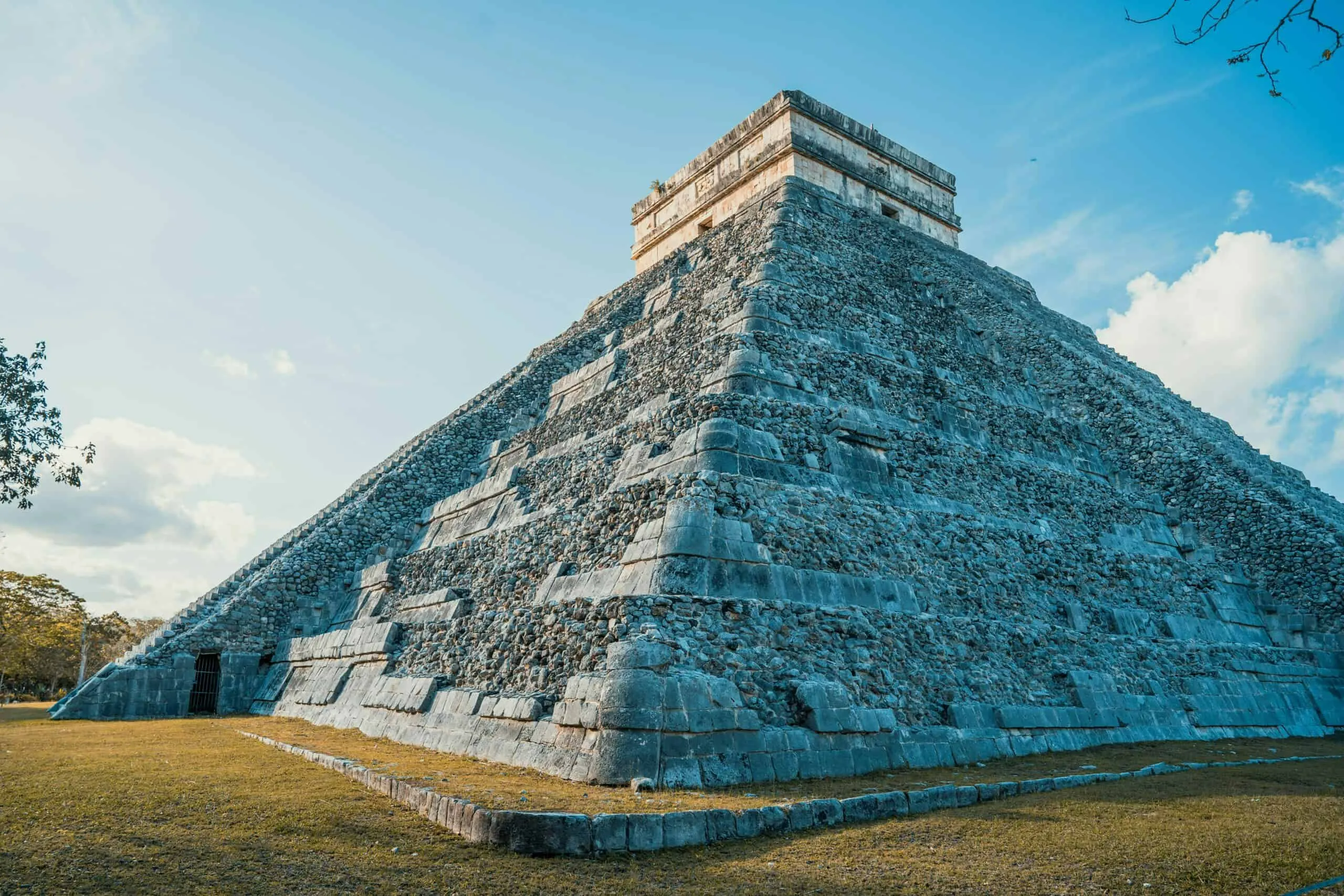
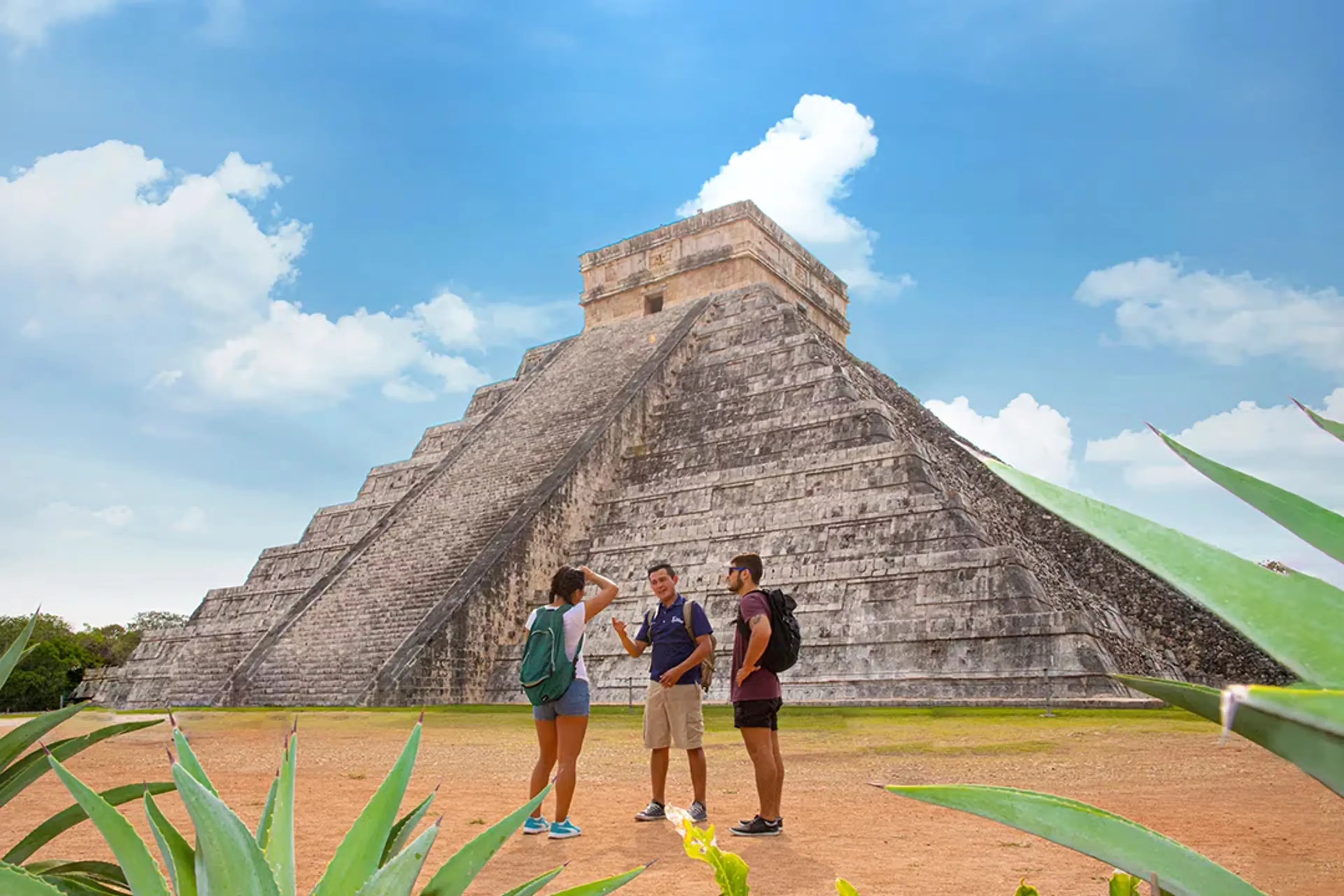
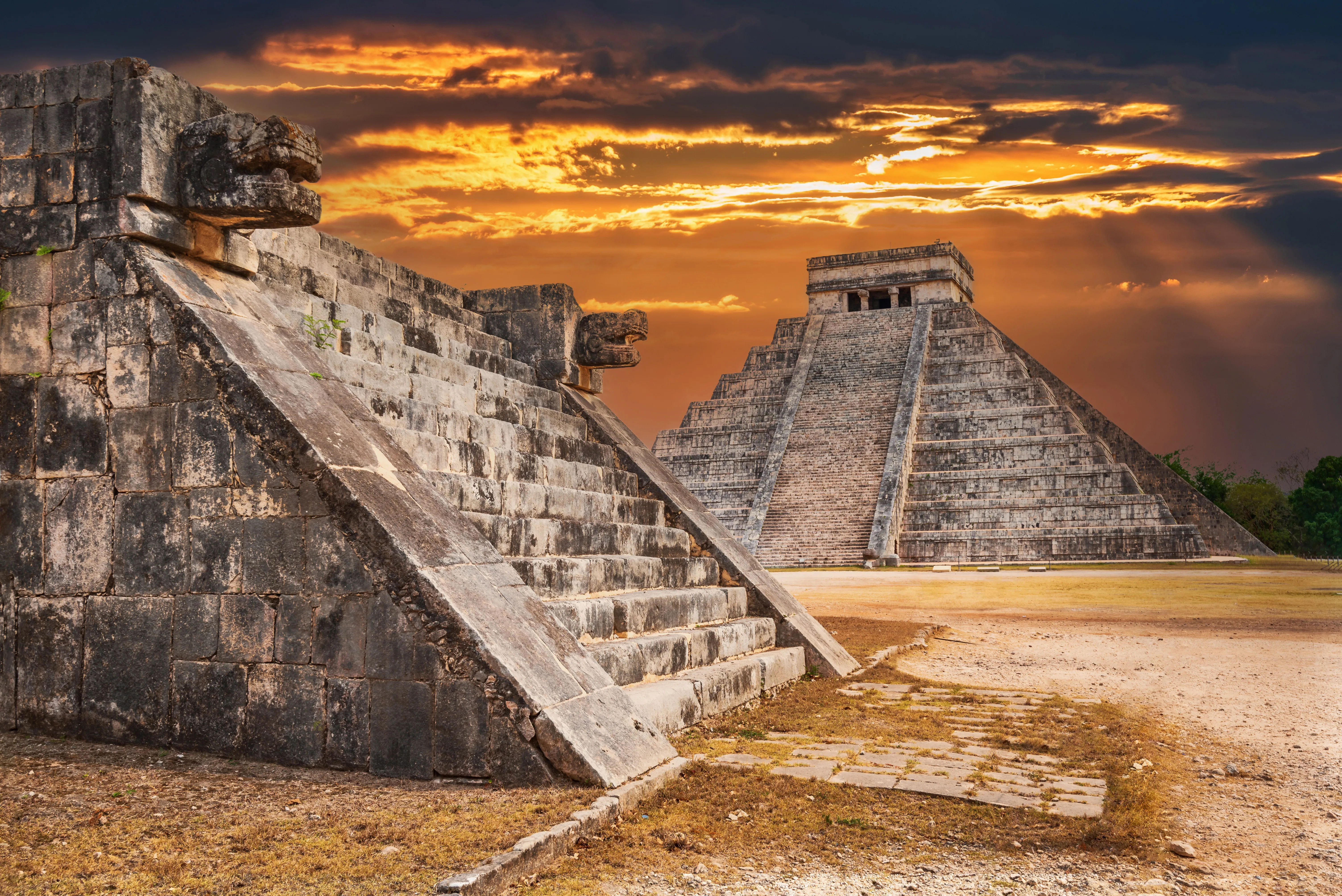
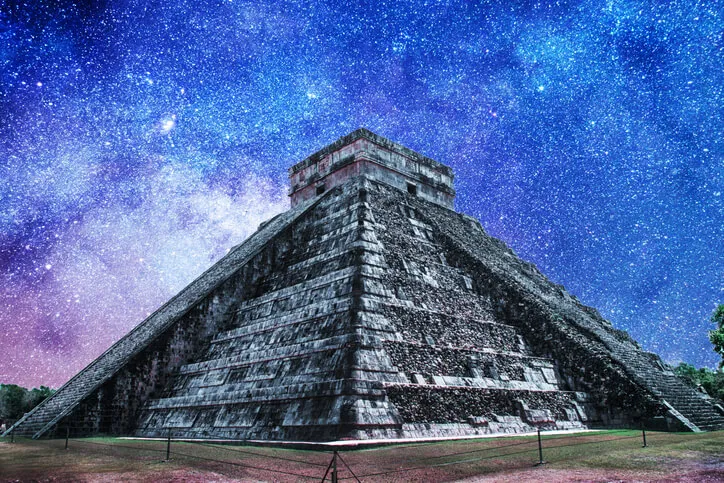
El Castillo, also known as the Temple of Kukulkan, is one of the most recognized pyramids in the world, yet photographs only hint at its conceptual depth. The building's proportions, stairways, terraces, and directional orientation have long been discussed in relation to calendrical symbolism and astronomical observation. During equinox periods, light and shadow effects on the northern staircase create the famous serpent illusion, a phenomenon that draws large crowds and reflects the Maya mastery of architectural theater rooted in cosmological thought.
Standing before the pyramid, many visitors notice a powerful contrast: strict geometry on one hand and natural surroundings on the other. That balance is part of the site's atmosphere. The structure was not built merely for visual impact; it anchored ceremonial life and projected legitimacy. In this sense, El Castillo functioned as a monumental interface between earthly authority and sacred order, making stone itself a language of governance and belief.
The Great Ball Court and ceremony
The Great Ball Court at Chichen Itza is extraordinary in scale and dramatic in design. Its parallel walls, ring markers, and associated relief panels indicate that the ritual ballgame held deep ceremonial significance beyond sport. Acoustic effects are striking here, often surprising visitors when sounds echo across the court with unusual clarity. This physical staging likely amplified spectacle and authority during gatherings, underscoring the performative dimension of civic and sacred life.
Nearby structures, including temple spaces connected to the court, suggest that events were tied to broader mythological and political narratives. Interpretations vary, and scholarship continues to evolve, but the court consistently appears as a place where symbolic conflict, cosmic order, and elite power were publicly negotiated. Walking this area with careful attention changes the visit from simple sightseeing into a deeper encounter with how ritual and statecraft could merge in Maya urbanism.
The Temple of the Warriors complex
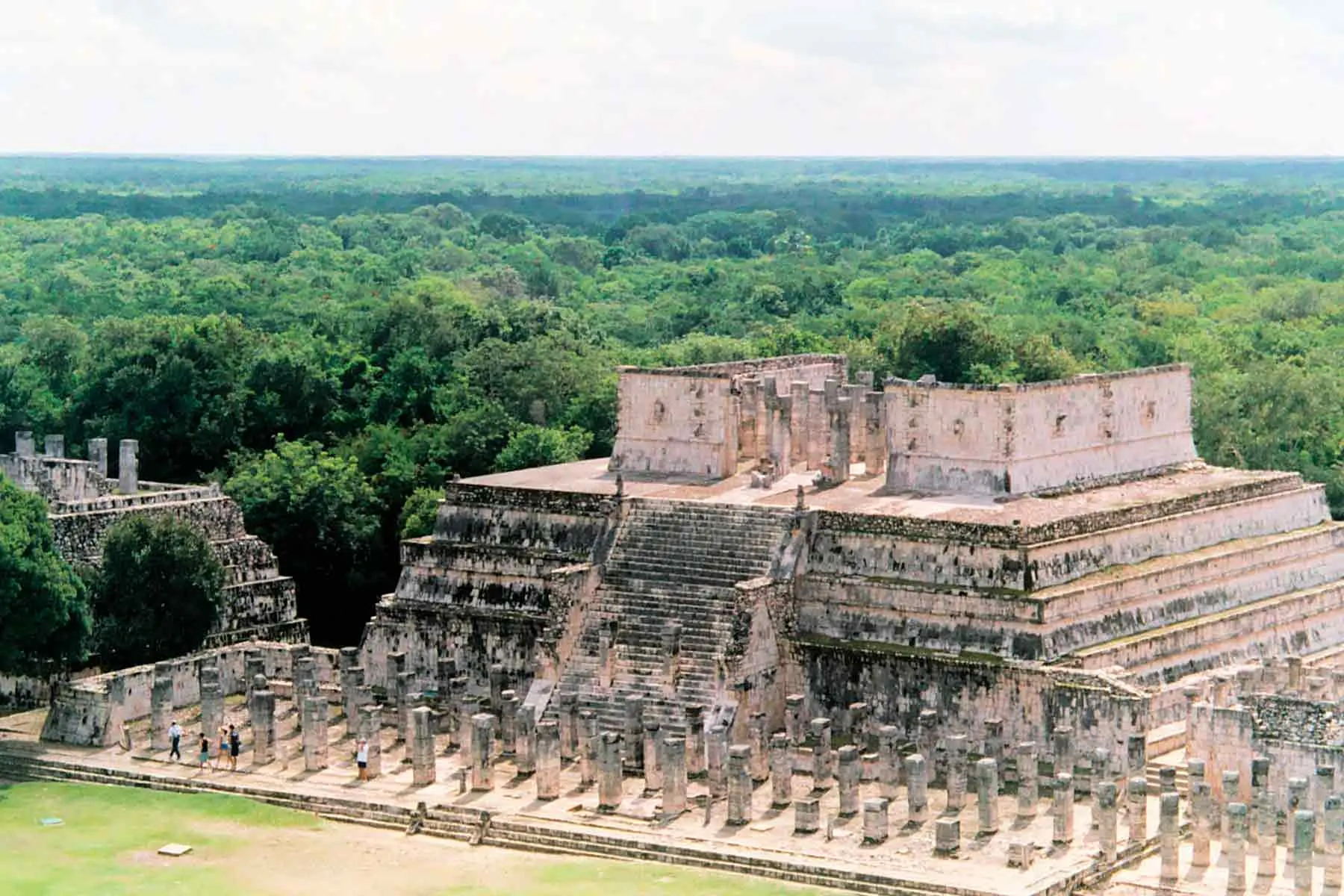
The Temple of the Warriors and the Group of a Thousand Columns form one of the most atmospheric zones at Chichen Itza. Rows of columns once supported roofed spaces that likely hosted processions, gatherings, and administrative activities tied to ceremonial functions. Sculptural programs in this area, including warrior imagery and the well known chacmool figure associated with offerings, reveal the integration of religious symbolism and political messaging.
As you move through this complex, the city feels intensely planned. Platforms connect to open spaces, movement lines feel deliberate, and architecture creates visual hierarchies that direct attention toward elevated ritual points. Even in ruin form, the ensemble communicates order and authority. It is one of the best places to appreciate Chichen Itza not as a single iconic pyramid, but as a coherent urban composition built to organize experience, belief, and power.
The Sacred Cenote and offerings
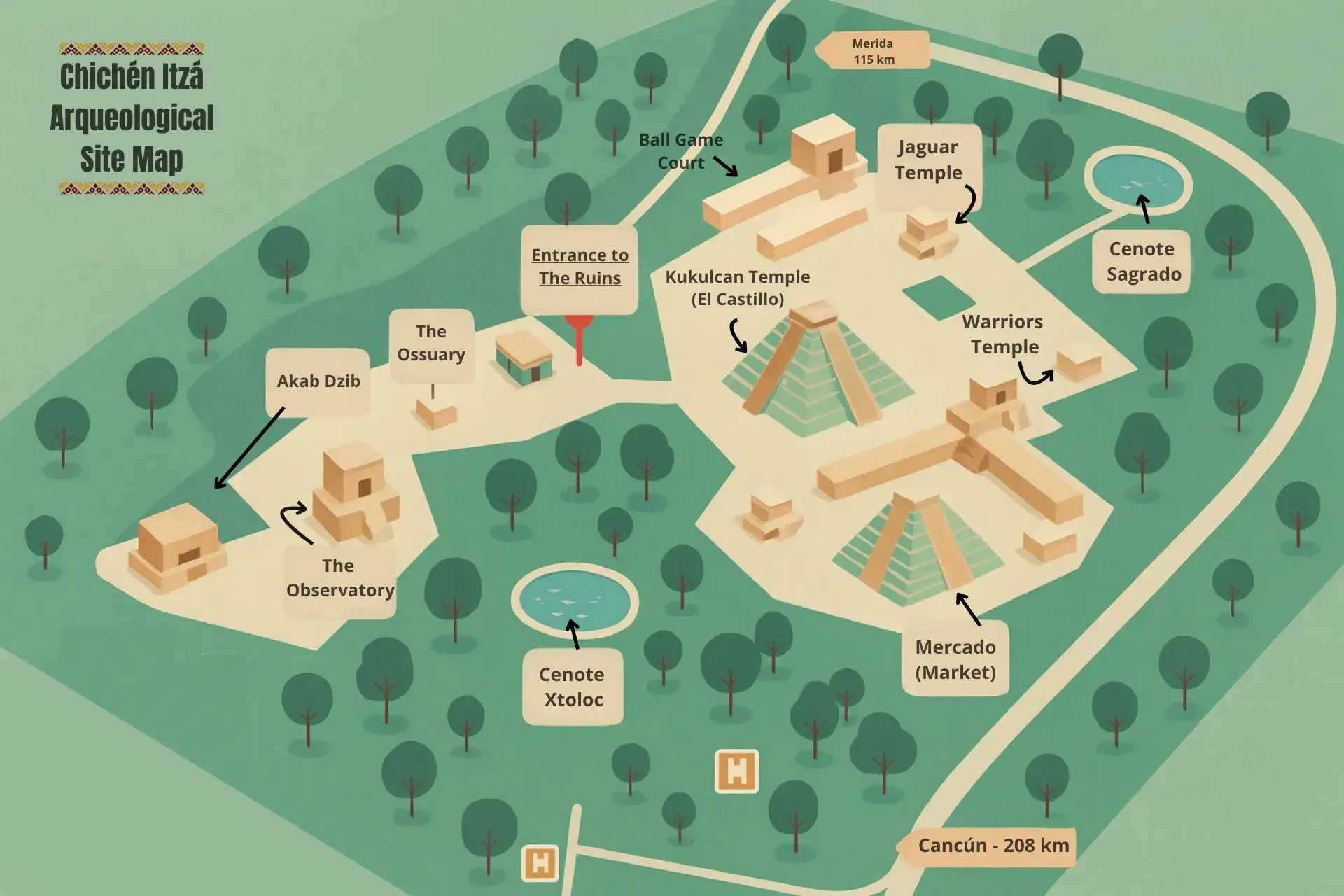
The Sacred Cenote is one of the most discussed features of Chichen Itza because it connects geology, spirituality, and politics in a single place. In a region where cenotes are essential water sources, this deep natural sinkhole held special ritual meaning. Historical records and archaeological investigations indicate that offerings were deposited here, including precious materials and objects associated with ceremony, devotion, and authority.
Approaching the cenote area today, visitors often sense a quieter mood compared with the central plaza. The setting encourages reflection on how natural landscapes were interpreted through sacred frameworks in Maya cosmology. Far from being peripheral, the cenote was central to how the city understood life, rain, fertility, and the relationship between human communities and spiritual forces.
Astronomy and El Caracol
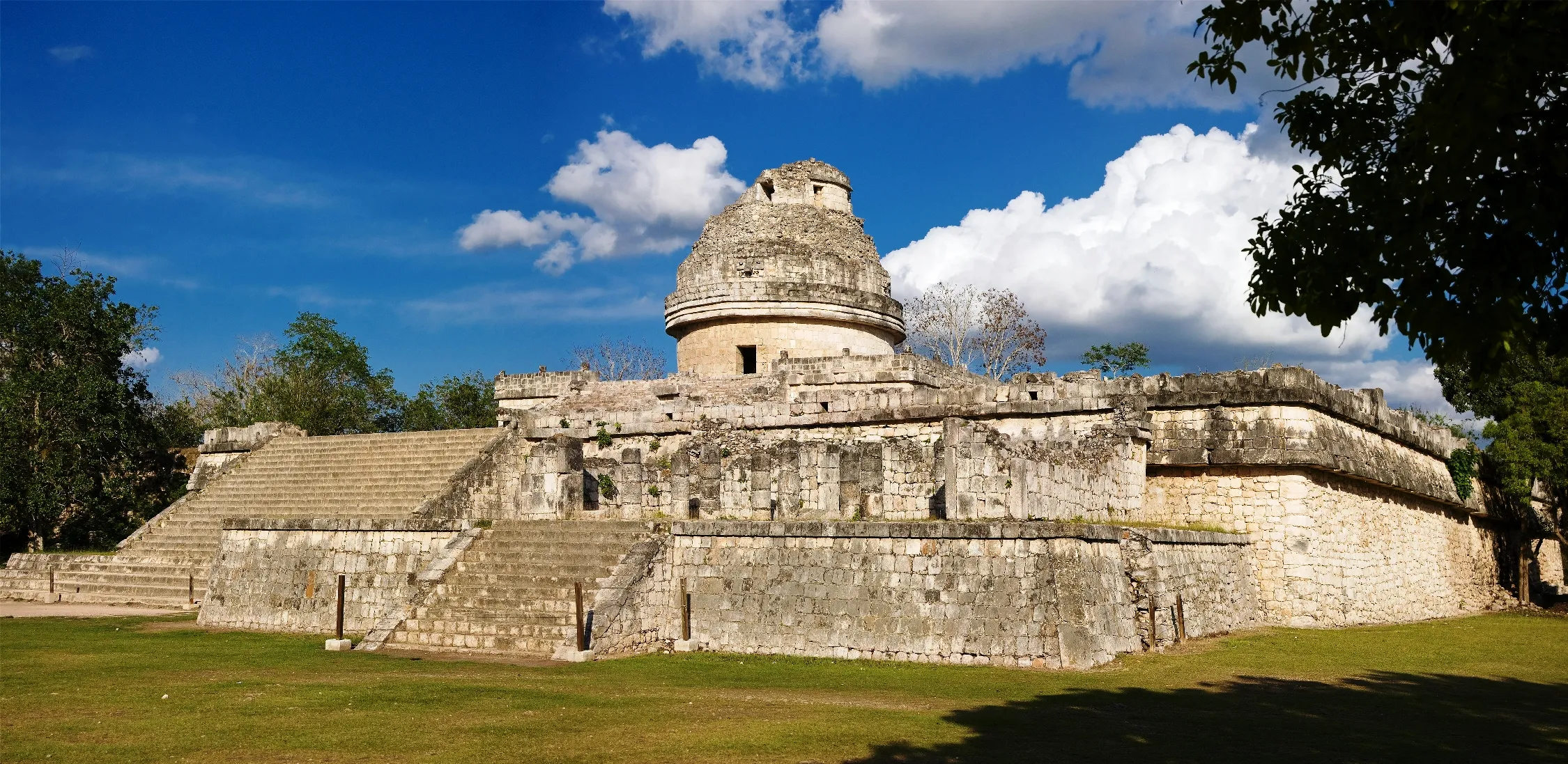
El Caracol, commonly described as an observatory, is among the most intriguing structures at Chichen Itza because of its unusual circular form and complex alignments. While interpretations continue to be refined by scholarship, many researchers have highlighted its potential links to celestial observation and calendrical knowledge. For visitors, it offers a powerful reminder that Maya intellectual life included sophisticated attention to cycles of time, planetary movement, and ritual timing.
Seeing El Caracol after the monumental symmetry of El Castillo broadens your understanding of the site. Chichen Itza was not architecturally repetitive; it was varied and conceptually layered. Different complexes appear to serve different social and ceremonial functions, suggesting a city where specialized knowledge communities, ritual authorities, and political actors interacted through shared built space.
Trade, influence, and regional networks
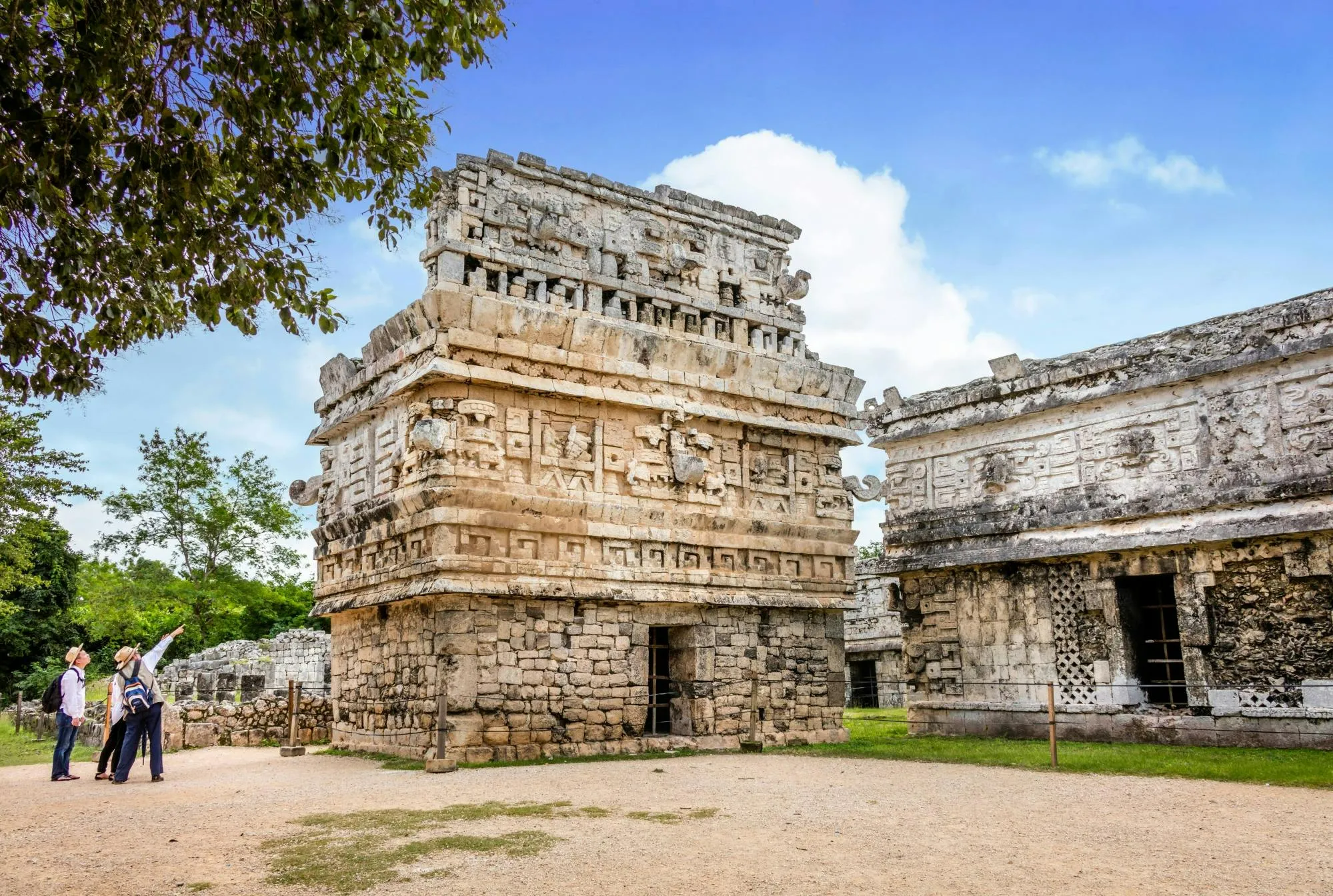
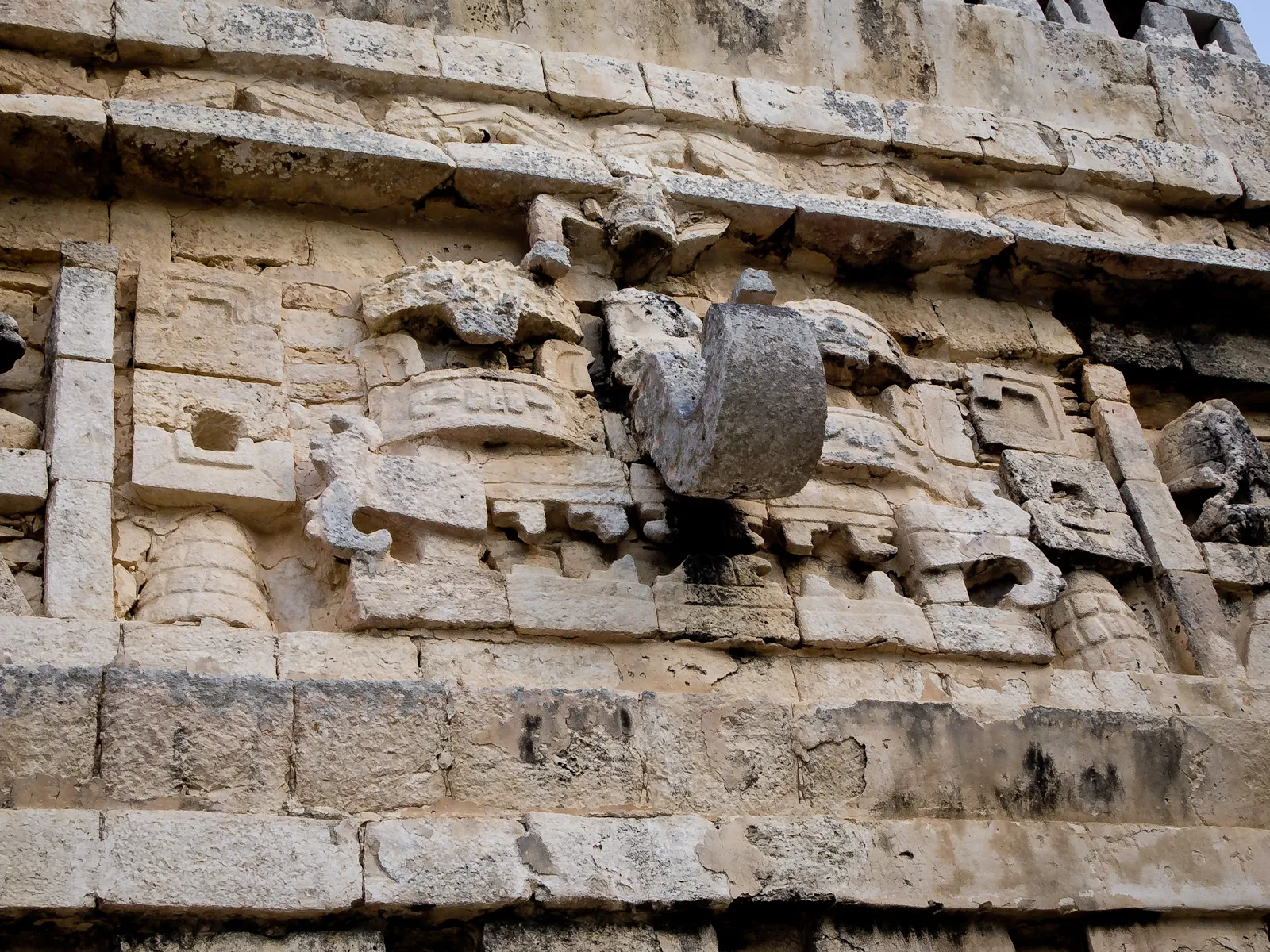
Chichen Itza's importance was never only local. Material culture, architectural styles, and iconographic patterns point to broad interaction across Mesoamerica, including coastal exchange routes and inland connections that moved goods, ideas, and people over long distances. This networked dimension helps explain why the site became so influential and why its visual language appears both deeply Maya and regionally interconnected.
For modern visitors, this is one of the most fascinating aspects of the site: Chichen Itza reflects mobility and cultural negotiation, not isolation. Its urban design and ceremonial spaces suggest a center that could absorb influences while asserting its own authority. In practical terms, every carved panel and platform can be read as part of a larger conversation spanning territories, traditions, and generations.
Crowds, heat, safety and accessibility
Chichen Itza is generally straightforward to navigate, but conditions can be demanding due to sun exposure and crowd density. The most effective strategy is simple: arrive early, hydrate consistently, wear sun protection, and pace yourself. Keep personal belongings secure in busy areas, and follow site rules designed to protect both visitors and heritage structures.
Accessibility is improving, yet terrain remains uneven in parts of the site. Some pathways are easier than others depending on weather and maintenance conditions. Travelers with mobility concerns should check current access information in advance and consider guided logistics that prioritize manageable routes and realistic timing.
Living Maya heritage in modern Mexico
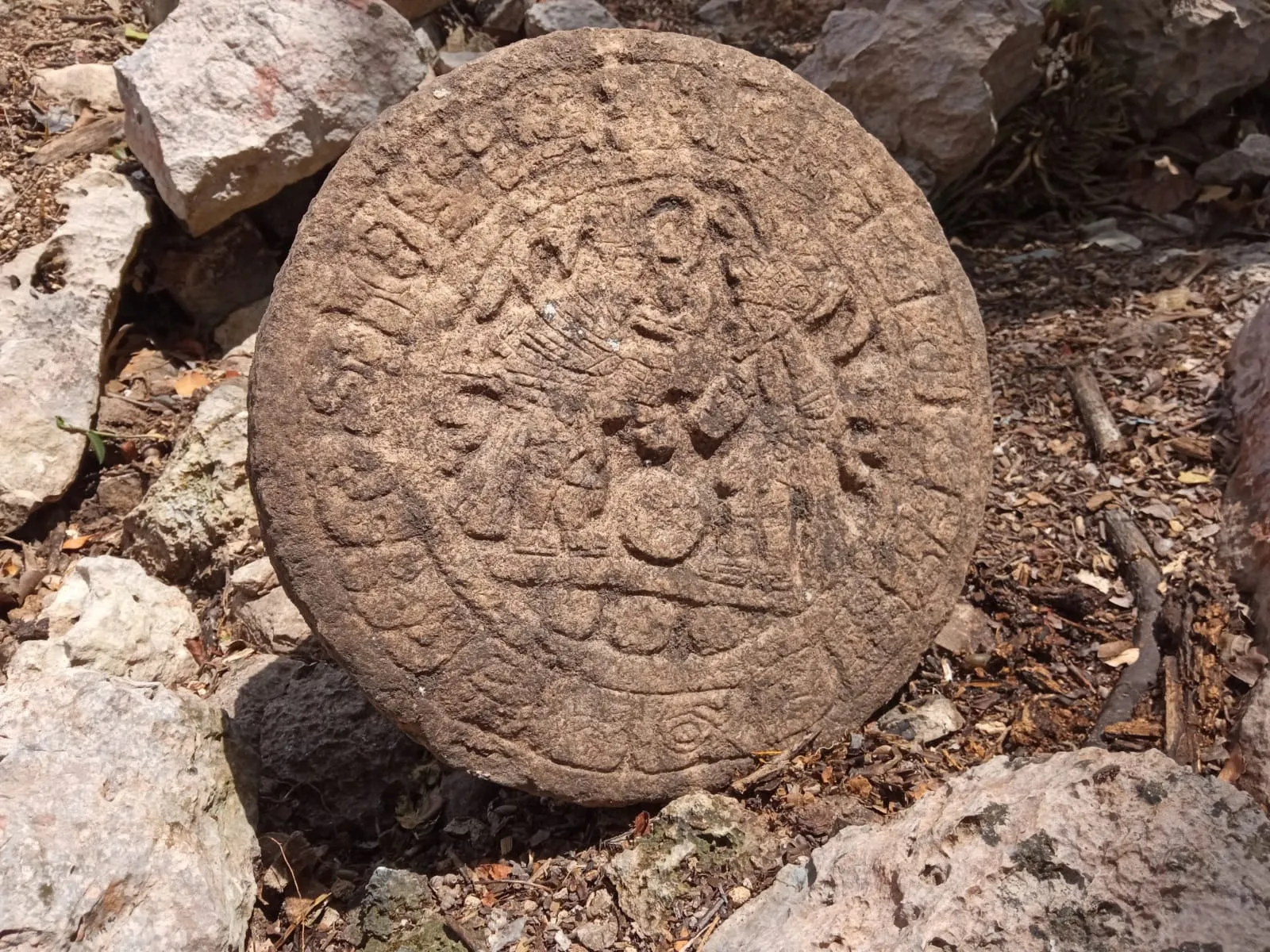
Visiting Chichen Itza can be the beginning of a broader cultural journey through Yucatan, where Maya heritage remains present in language, food traditions, crafts, and community memory. The archaeological zone belongs to the deep past, but it also resonates in the living present through families, local narratives, and regional identities that continue to evolve.
Approaching the site with respect means recognizing this continuity. Beyond taking photos, many travelers choose to learn basic historical context, support local businesses responsibly, and engage with the region in ways that honor both heritage and current communities. That perspective turns a standard day trip into a more thoughtful and human experience.
Tickets, guides and practical planning
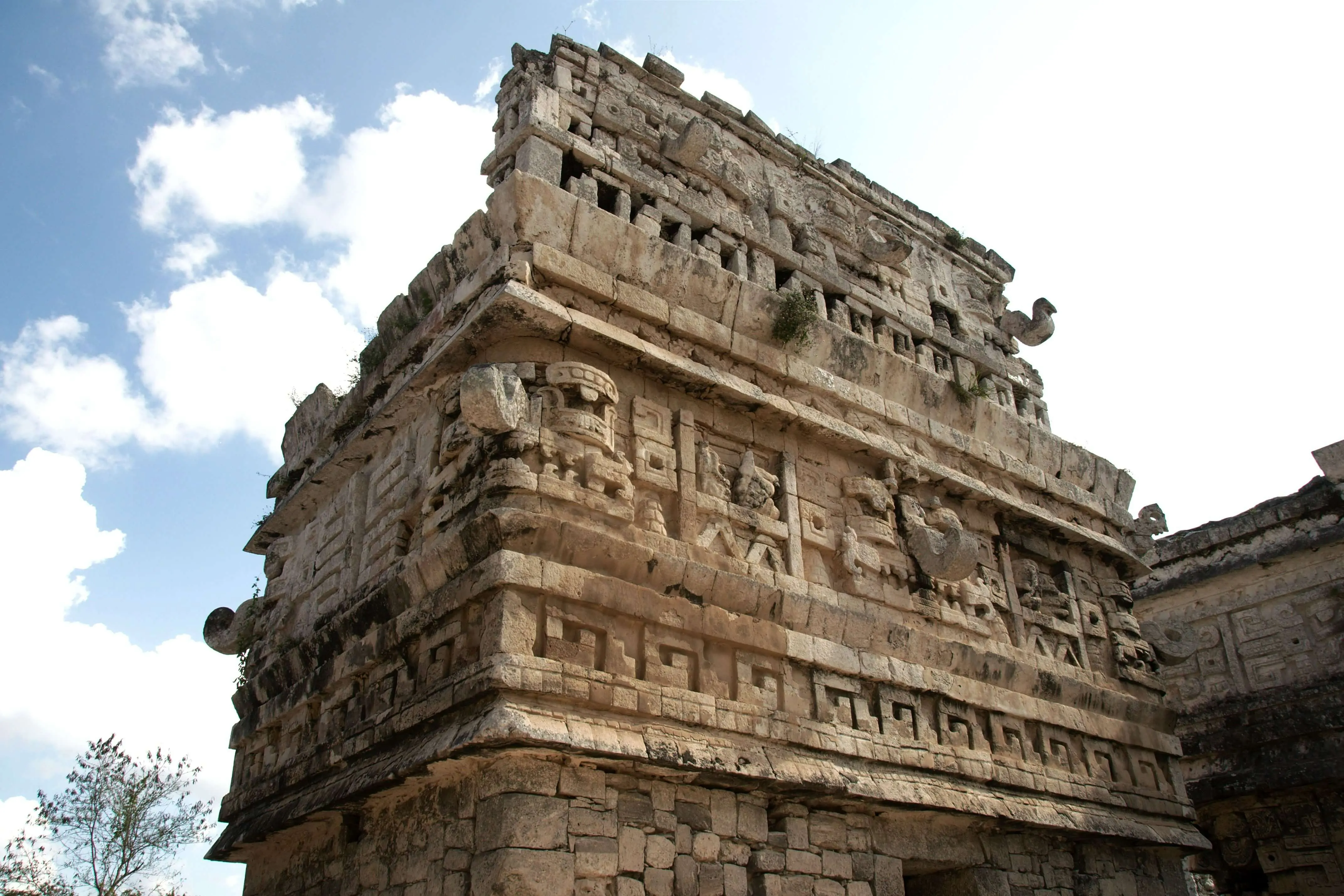
Ticket decisions shape the quality of your day more than most people expect. Entry only options give maximum freedom, while guided packages add narrative depth and simplify logistics. If you are staying in coastal resorts, transport time can be significant, so compare departure schedules, pickup zones, and total duration before committing.
Smart planning also means sequencing your energy: start with headline structures early, move to secondary areas before peak heat, and reserve time for rest, hydration, and return logistics. If you plan to add a cenote or Valladolid stop, check realistically how much time remains after the archaeological visit. A balanced itinerary always feels better than an overloaded one.
Conservation and responsible tourism
Chichen Itza is both a world famous destination and an active conservation challenge. Stone surfaces weather over time, biological growth affects carvings, and heavy foot traffic increases pressure on fragile contexts. Site management teams and researchers work continuously to protect structures while maintaining educational access for millions of visitors.
Responsible tourism makes a real difference: follow marked paths, respect restricted zones, avoid touching carvings, and support official channels that contribute to preservation. Small visitor choices, repeated across thousands of people each day, directly influence how well this extraordinary heritage can be protected for future generations.
Nearby cenotes and day trip ideas
Many travelers pair Chichen Itza with a cenote stop, and this can be a great combination if timed carefully. After hours in open sun, a cenote swim offers a refreshing reset and a different perspective on Yucatan's geology and sacred landscapes. Some itineraries also include brief stops for local food or handcrafted goods.
Valladolid is another popular add on, especially for travelers who enjoy colonial architecture, slower pace, and regional cuisine. If you include multiple stops, prioritize quality over quantity. One meaningful archaeological visit plus one well chosen secondary experience usually feels richer than rushing through three or four locations in one long day.
Why Chichen Itza still matters today
Chichen Itza matters because it preserves evidence of a highly sophisticated civilization that developed advanced systems of architecture, astronomy, governance, and symbolism long before modern nation states. It invites visitors to reconsider simplistic narratives of the past and to appreciate the intellectual depth and diversity of Mesoamerican history.
It also matters because heritage is never static. Each generation studies, protects, interprets, and debates sites like this in new ways. Visiting Chichen Itza with curiosity and respect is not just tourism; it is participation in a larger cultural conversation about memory, identity, and the responsibility to protect human history with care.
Table of Contents
Origins of Chichen Itza
Long before modern highways connected Cancun, Merida, and Valladolid, this region of the Yucatan Peninsula supported complex Maya communities linked by trade routes, ritual traditions, and shared systems of knowledge. Chichen Itza emerged over centuries as one of the most significant urban and ceremonial centers in the northern lowlands, not as an isolated monument, but as a dynamic city connected to wider networks of exchange and political influence. Archaeological evidence suggests periods of growth, transformation, and adaptation that made the site resilient and culturally powerful for generations.
Its name is commonly interpreted as referring to the mouth of the well of the Itza, pointing to the importance of water and sacred geography in a limestone landscape shaped by cenotes. Chichen Itza did not rise in a single moment; it evolved through changing leadership, architectural programs, and regional relationships. What visitors see today is the visible surface of a long historical process in which religion, governance, astronomy, and economy reinforced one another, producing a city that still commands global attention.
El Castillo and sacred geometry
El Castillo, also known as the Temple of Kukulkan, is one of the most recognized pyramids in the world, yet photographs only hint at its conceptual depth. The building's proportions, stairways, terraces, and directional orientation have long been discussed in relation to calendrical symbolism and astronomical observation. During equinox periods, light and shadow effects on the northern staircase create the famous serpent illusion, a phenomenon that draws large crowds and reflects the Maya mastery of architectural theater rooted in cosmological thought.
Standing before the pyramid, many visitors notice a powerful contrast: strict geometry on one hand and natural surroundings on the other. That balance is part of the site's atmosphere. The structure was not built merely for visual impact; it anchored ceremonial life and projected legitimacy. In this sense, El Castillo functioned as a monumental interface between earthly authority and sacred order, making stone itself a language of governance and belief.
The Great Ball Court and ceremony
The Great Ball Court at Chichen Itza is extraordinary in scale and dramatic in design. Its parallel walls, ring markers, and associated relief panels indicate that the ritual ballgame held deep ceremonial significance beyond sport. Acoustic effects are striking here, often surprising visitors when sounds echo across the court with unusual clarity. This physical staging likely amplified spectacle and authority during gatherings, underscoring the performative dimension of civic and sacred life.
Nearby structures, including temple spaces connected to the court, suggest that events were tied to broader mythological and political narratives. Interpretations vary, and scholarship continues to evolve, but the court consistently appears as a place where symbolic conflict, cosmic order, and elite power were publicly negotiated. Walking this area with careful attention changes the visit from simple sightseeing into a deeper encounter with how ritual and statecraft could merge in Maya urbanism.
The Temple of the Warriors complex
The Temple of the Warriors and the Group of a Thousand Columns form one of the most atmospheric zones at Chichen Itza. Rows of columns once supported roofed spaces that likely hosted processions, gatherings, and administrative activities tied to ceremonial functions. Sculptural programs in this area, including warrior imagery and the well known chacmool figure associated with offerings, reveal the integration of religious symbolism and political messaging.
As you move through this complex, the city feels intensely planned. Platforms connect to open spaces, movement lines feel deliberate, and architecture creates visual hierarchies that direct attention toward elevated ritual points. Even in ruin form, the ensemble communicates order and authority. It is one of the best places to appreciate Chichen Itza not as a single iconic pyramid, but as a coherent urban composition built to organize experience, belief, and power.
The Sacred Cenote and offerings
The Sacred Cenote is one of the most discussed features of Chichen Itza because it connects geology, spirituality, and politics in a single place. In a region where cenotes are essential water sources, this deep natural sinkhole held special ritual meaning. Historical records and archaeological investigations indicate that offerings were deposited here, including precious materials and objects associated with ceremony, devotion, and authority.
Approaching the cenote area today, visitors often sense a quieter mood compared with the central plaza. The setting encourages reflection on how natural landscapes were interpreted through sacred frameworks in Maya cosmology. Far from being peripheral, the cenote was central to how the city understood life, rain, fertility, and the relationship between human communities and spiritual forces.
Astronomy and El Caracol
El Caracol, commonly described as an observatory, is among the most intriguing structures at Chichen Itza because of its unusual circular form and complex alignments. While interpretations continue to be refined by scholarship, many researchers have highlighted its potential links to celestial observation and calendrical knowledge. For visitors, it offers a powerful reminder that Maya intellectual life included sophisticated attention to cycles of time, planetary movement, and ritual timing.
Seeing El Caracol after the monumental symmetry of El Castillo broadens your understanding of the site. Chichen Itza was not architecturally repetitive; it was varied and conceptually layered. Different complexes appear to serve different social and ceremonial functions, suggesting a city where specialized knowledge communities, ritual authorities, and political actors interacted through shared built space.
Trade, influence, and regional networks
Chichen Itza's importance was never only local. Material culture, architectural styles, and iconographic patterns point to broad interaction across Mesoamerica, including coastal exchange routes and inland connections that moved goods, ideas, and people over long distances. This networked dimension helps explain why the site became so influential and why its visual language appears both deeply Maya and regionally interconnected.
For modern visitors, this is one of the most fascinating aspects of the site: Chichen Itza reflects mobility and cultural negotiation, not isolation. Its urban design and ceremonial spaces suggest a center that could absorb influences while asserting its own authority. In practical terms, every carved panel and platform can be read as part of a larger conversation spanning territories, traditions, and generations.
Crowds, heat, safety and accessibility
Chichen Itza is generally straightforward to navigate, but conditions can be demanding due to sun exposure and crowd density. The most effective strategy is simple: arrive early, hydrate consistently, wear sun protection, and pace yourself. Keep personal belongings secure in busy areas, and follow site rules designed to protect both visitors and heritage structures.
Accessibility is improving, yet terrain remains uneven in parts of the site. Some pathways are easier than others depending on weather and maintenance conditions. Travelers with mobility concerns should check current access information in advance and consider guided logistics that prioritize manageable routes and realistic timing.
Living Maya heritage in modern Mexico
Visiting Chichen Itza can be the beginning of a broader cultural journey through Yucatan, where Maya heritage remains present in language, food traditions, crafts, and community memory. The archaeological zone belongs to the deep past, but it also resonates in the living present through families, local narratives, and regional identities that continue to evolve.
Approaching the site with respect means recognizing this continuity. Beyond taking photos, many travelers choose to learn basic historical context, support local businesses responsibly, and engage with the region in ways that honor both heritage and current communities. That perspective turns a standard day trip into a more thoughtful and human experience.
Tickets, guides and practical planning
Ticket decisions shape the quality of your day more than most people expect. Entry only options give maximum freedom, while guided packages add narrative depth and simplify logistics. If you are staying in coastal resorts, transport time can be significant, so compare departure schedules, pickup zones, and total duration before committing.
Smart planning also means sequencing your energy: start with headline structures early, move to secondary areas before peak heat, and reserve time for rest, hydration, and return logistics. If you plan to add a cenote or Valladolid stop, check realistically how much time remains after the archaeological visit. A balanced itinerary always feels better than an overloaded one.
Conservation and responsible tourism
Chichen Itza is both a world famous destination and an active conservation challenge. Stone surfaces weather over time, biological growth affects carvings, and heavy foot traffic increases pressure on fragile contexts. Site management teams and researchers work continuously to protect structures while maintaining educational access for millions of visitors.
Responsible tourism makes a real difference: follow marked paths, respect restricted zones, avoid touching carvings, and support official channels that contribute to preservation. Small visitor choices, repeated across thousands of people each day, directly influence how well this extraordinary heritage can be protected for future generations.
Nearby cenotes and day trip ideas
Many travelers pair Chichen Itza with a cenote stop, and this can be a great combination if timed carefully. After hours in open sun, a cenote swim offers a refreshing reset and a different perspective on Yucatan's geology and sacred landscapes. Some itineraries also include brief stops for local food or handcrafted goods.
Valladolid is another popular add on, especially for travelers who enjoy colonial architecture, slower pace, and regional cuisine. If you include multiple stops, prioritize quality over quantity. One meaningful archaeological visit plus one well chosen secondary experience usually feels richer than rushing through three or four locations in one long day.
Why Chichen Itza still matters today
Chichen Itza matters because it preserves evidence of a highly sophisticated civilization that developed advanced systems of architecture, astronomy, governance, and symbolism long before modern nation states. It invites visitors to reconsider simplistic narratives of the past and to appreciate the intellectual depth and diversity of Mesoamerican history.
It also matters because heritage is never static. Each generation studies, protects, interprets, and debates sites like this in new ways. Visiting Chichen Itza with curiosity and respect is not just tourism; it is participation in a larger cultural conversation about memory, identity, and the responsibility to protect human history with care.